
Gears & Mechanisms
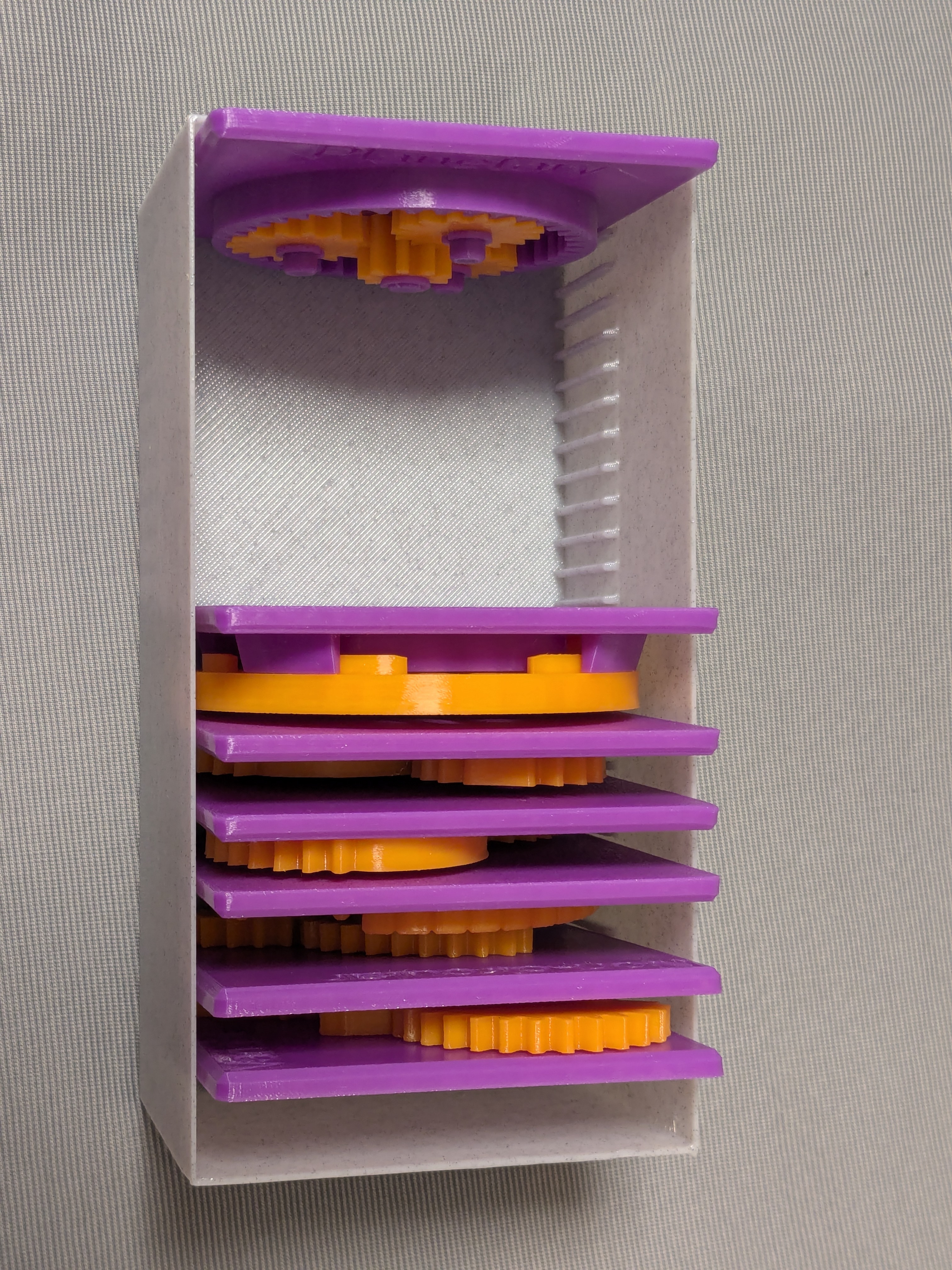
Educational model of Planetary Gear
SKU 3DPW-pr-1458243
$50.00NZD
In stock · Made-to-order resin · Ships from Auckland · Free shipping over $75
- Material
- High-Detail Resin (8K)
- Colour
- Grey
- Weight
- ~40 g
- Print time
- ~4.5 h
- Shipping
- $10 std · $20 express
- Lead time
- 1-3 d print + 1-4 d ship
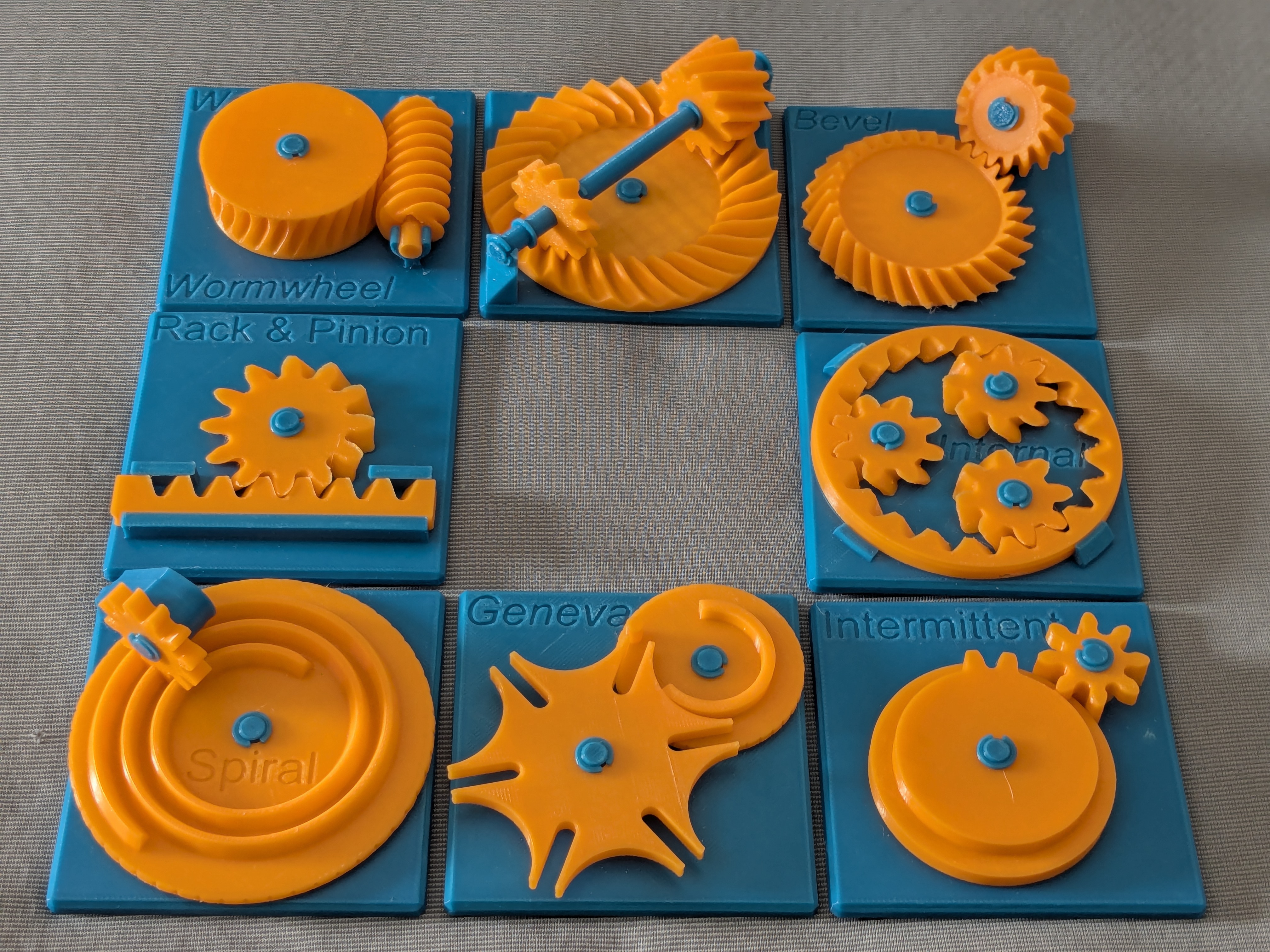
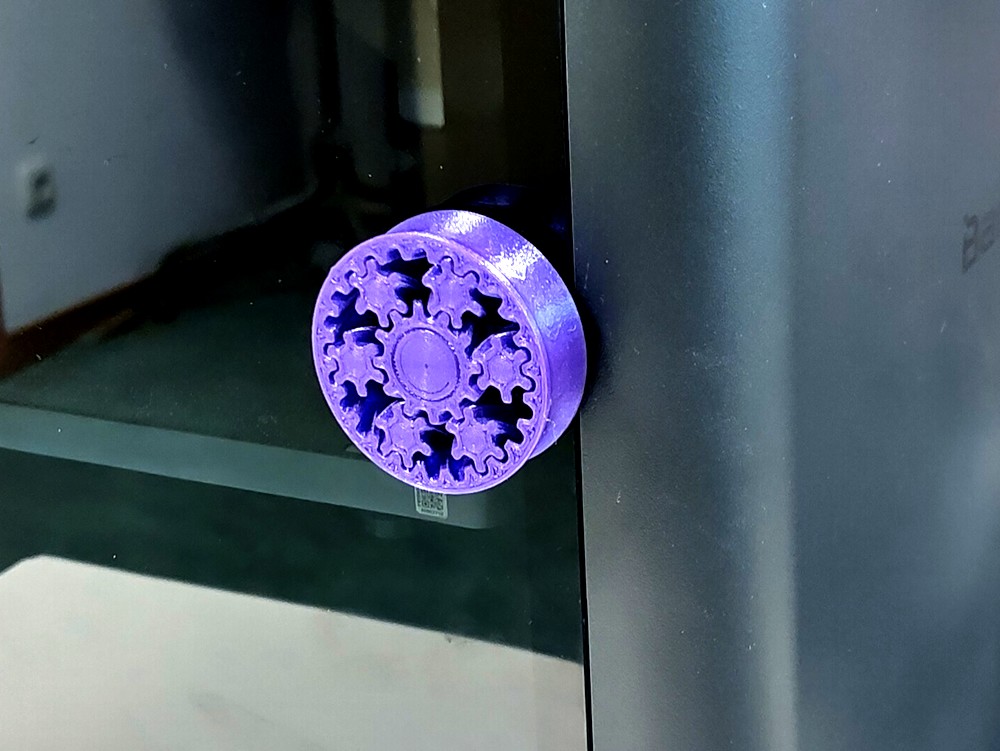
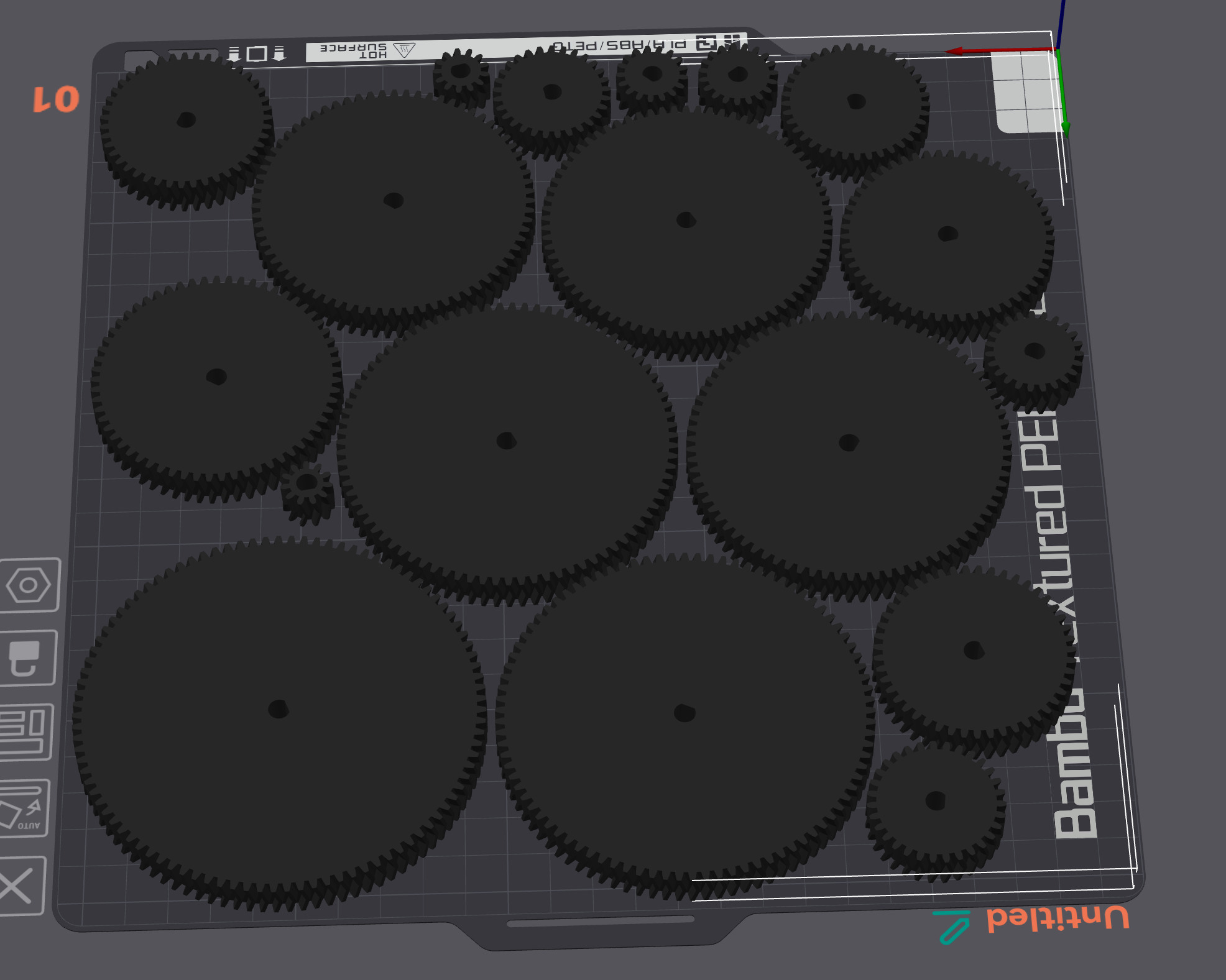
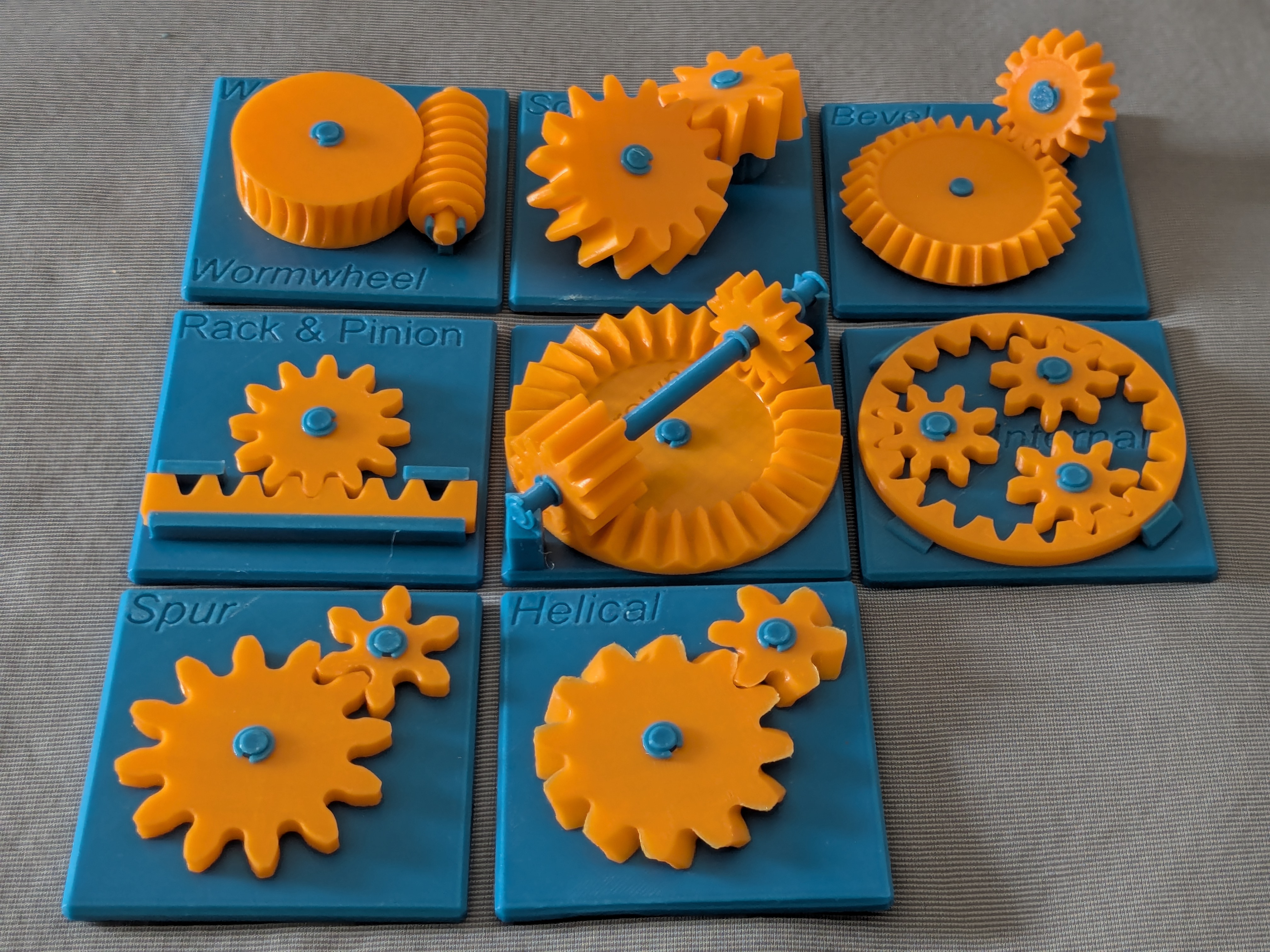
My Educational Mechanical Examples SeriesThis model is one of my educational mechanical mechanism examples on 80mm x 80mm base plates. You can find all models in the series in this collection => [Mechanical Mechanism Examples] The present modelThis is an educational model of the Planetary Gear. Brief DescriptionA planetary gear can achieve a high reduction ratio in a compact, coaxial configuration. In this model, the small central spur gear—the sun gear—serves as the input, while the planetary carrier, the rotatable table on the backside that holds the three larger spur gears (the planet gears), serves as the output. The surrounding internal gear is fixed to the base plate. When the sun gear rotates, the planet gears rotate on their own axes (self-rotation) while simultaneously revolving around the sun gear. This revolution corresponds to the rotation of the backside table, which becomes the output motion. In this model, the sun gear has 9 teeth, each planet gear has 15 teeth, and the internal gear has 39 teeth with the relation 9 + 2 x 15 = 39 to have correct meshing with using the standard gear shapes without modification. With these parameters, the reduction ratio is as large as 1 : 5.33 . To understand the operating principle, it helps to imagine the planetary carrier being fixed. In that case, for each full rotation of a planet gear, the internal gear rotates 15/39 turns, and the sun gear rotates in the opposite direction by 15/9 turns. So, from the internal gear’s frame of reference, during the 15/39 rotation of the planetary carrier, the sun gear rotates 15/39 + 15/9 turns. As a result, the overall gear ratio is: (15/39)/(15/39+15/9) = 1/(1+39/9) = 9/(9+39) = 3/16 ~ 1 : 5.33 Planetary gears are widely used in machines that require compact and efficient torque transmission. They are found in automobile transmissions, robotic joints, wind turbines, and industrial reducers, taking advantage of their coaxial layout, high torque density, and balanced load distribution. So, It has similar applications to the cycloidal drive, whose model is also available in this educational model series. CaseThis model is compatible with the case included in my first set. PrintingUse the models named ???-printable.stl for printing. The models named ???-assembled.stl are provided just to show how they should be assembled. Use well-dried PETG to have better dimensional accuracy.Use 0.1 mm or 0.08 mm layer height to have smoother surfaces.Use slow printing speed for overhangs.Select “Random” seam position to have smoother rotation. Randomly distributed seam should be easily worn out after some wearing.PrintingSanding and FilingSometimes, the gears suffer from the stringing effect and/or elephant foot effect, resulting in a too tight fit to the shafts (they are designed with a 0.15 mm radial clearance). If you see rough surface on the shafts due to stringing, sand off the roughness with a small piece of sand paper. If you feel the gears do not rotate smoothly due to an elephant effect, widen the hole slightly by using a thin round bar file. Without those issues, the parts should rotate very smoothly with minimal friction. AssemblyNo glue is needed. Just snap the retaining rings onto the shafts. Other examplesYou may also be interested in the models in my educational mechanical mechanism examples. Find them in this collection: https://www.printables.com/@osamutake_3341417/collections/2728214 Happy printing! AcknowledgementI got into gears thanks to K.$uzuki's amazing articles and YouTube videos. Many of the mechanisms shown in this series came from the introductions on his website. He also makes excellent gear models himself. This series wouldn’t have existed without his inspiration. I learned a lot about technical detail of designing gear tooth profiles from Haguruma-No-Hanashi website. I’m truly grateful for that.
Tags: gear, education, planetarygear, resin print, nz made, made to order
Design credit: Original design by osamutake - licensed under CC-BY.
View original model + STL files on Printables ↗
View original model + STL files on Printables ↗
Frequently asked
How long does shipping take?
Educational model of Planetary Gear is printed to order. Lead time is typically 1-3 business days plus 1-4 days NZ shipping. Standard NZ shipping is $10, free over $75.
What material is this printed in?
By default this is printed in High-Detail Resin (8K) at 0.025 mm layer height on an MSLA resin printer. Custom material and colour swaps are available, just leave a note at checkout.
Can I get this in a different colour?
Yes. Every product can be printed in any of the resin colours we stock, or hand-painted on request. Leave a note at checkout or email [email protected].
Do you ship outside of New Zealand?
Currently New Zealand only. Australian shipping is coming.
Who designed this?
Designed by an independent sculptor and licensed for commercial printing. The original is linked on this page.